Cambodia
The LoverCambodia is the setting of the family’s failed land venture and one of the central spaces through which the Narrator understands maternal despair, colonial poverty, and the family’s long suspension between hope and defeat. It is not merely a foreign destination: the country becomes the material form of the mother’s project, the children’s confinement, and a landscape repeatedly crossed without ever becoming a home.
The Land by the Dike
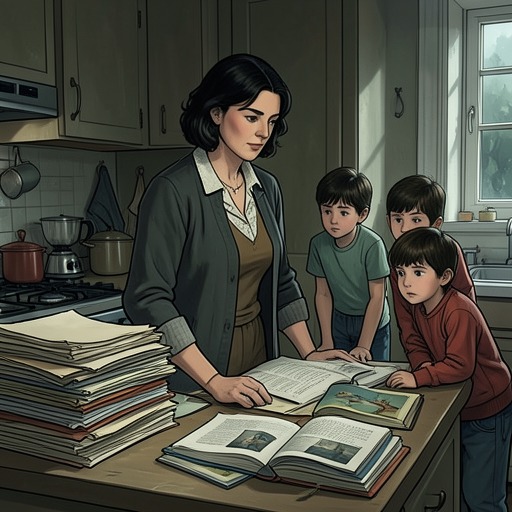
The mother buys land in Cambodia while the Elder Brother is away in France studying at a technical school. The purchase is described as a terrible business: the land becomes an economic disaster, while the Elder Brother’s absence is nevertheless preferable to his return, because the family fears the violence he directs toward the younger children. Cambodia therefore enters the family history through a double structure of hope and danger. The mother imagines property as a future for her children, but the venture instead intensifies the family’s poverty and binds their lives to a failed colonial enterprise.
The mother continues to travel to the property even after its lower portion has been lost. On the trips, the family stays for several days on the veranda of a bungalow facing the mountains of Siam. The journeys are made at night, and the Narrator, the younger brother, and their mother return home afterward, repeating a movement that no longer serves any practical purpose. The mother has nothing left to do there, yet she goes on going. Her persistence makes Cambodia less a functioning estate than a scene of attachment to an irrecoverable future.
Landscape and Labor
The property lies in a broad southern landscape of mud, rice, forest, and water. The servants work the higher patches after the lower land is lost, keeping the paddy for themselves and remaining without wages. They use the sturdy straw huts the mother built, and they care for the bungalow as though it belonged to their own family. Their labor preserves a remnant of order after the economic project has failed, while also revealing the unequal colonial arrangement on which the household depends.
The bungalow itself survives in a state of controlled deterioration. Its roof, damaged by endless rain, continues to disintegrate, but the furniture is polished and the cheap crockery remains in place. The doors are opened each day to let the wind dry the wood and closed at night against stray dogs and smugglers from the mountains. The house is thus maintained without being restored: its outline remains visible from the road even as its purpose collapses. Cambodia’s physical environment records the same slow erosion that marks the family’s fortunes.
The children’s relation to the property changes with age. When they are younger, they bathe in the river, hunt black panther in the marshes of the estuary, enter the forest, and visit villages in the pepper plantations. Later, they are too old for those activities, and the whole surrounding world seems to have grown up with them. There are no more children on the buffalos or elsewhere. The family sits on the veranda watching the forest, waiting, and weeping; the sluggishness that has overtaken the mother overtakes the children as well. Cambodia becomes a landscape of arrested development, where maturation brings neither freedom nor a new future.
Cambodia Within the Mekong Network
The Cambodian property is connected to the wider colonial transport system by the Mekong and its branches. The ferry crossing that introduces the Narrator’s decisive adolescent image runs between Vinh Long and Sadec, through the great plain of mud and rice in southern Cochin China. The river carries material from Tonle Sap and the Cambodian forest: straw huts, forests, burned-out fires, dead birds, dead dogs, drowned tigers and buffalos, drowned men, bait, and islands of water hyacinths. Cambodia is present in this current not as a stable territory but as part of a vast flow toward the Pacific, where everything is swept along before it can sink.
The journey between Cambodia and the colonial cities is also shaped by class and access. The Narrator’s mother travels to the property by bus and ferry, while the wealthy Chinese man from Cholon moves through the same world in a black limousine. The contrast makes transport a visible measure of social power. After the Narrator enters the limousine, she imagines never again traveling by a native bus and anticipates being driven between the high school and the boarding school. The route through Cambodia thus helps produce the encounter between poverty and wealth, whiteness and Chinese identity, and adolescent vulnerability and male economic power.
Property, City, and Colonial Modernity
The failed Cambodian venture is set against the urban wealth accumulated in Cholon. The Lover from Cholon’s father owns working-class housing and has built three hundred cheap semidetached dwellings, or compartments, in native housing estates. He has also sold rice fields in Sadec and bought building land south of Cholon. His account of the compartments presents colonial urban development as practical and even benevolent: poor people supposedly prefer to live close together and outdoors, and covered balconies allow them to spend the day, or sleep in hot weather, above the street.
The Narrator hears this explanation from within the lover’s modern apartment, then in a Chinese restaurant occupying several floors of an entire building. The restaurant’s terraces, orchestras, shouted orders, fans, and heavy draperies create a dense urban world sharply opposed to the abandoned bungalow and forest. Yet both spaces depend on the same colonial economy. The mother’s land represents failed rural speculation; the father’s compartments represent successful urban ownership. Cambodia is therefore not outside modernity but one of the places where its unequal risks are imposed most visibly.
Memory, Death, and Significance
Cambodia also carries the family’s associations with death. After the Narrator’s father leaves for a new post in Phnom Penh, he spends only a few weeks there and dies in less than a year. The mother remains in Phnom Penh, in a fine house overlooking the Mekong that had once been the palace of the king of Cambodia. The enormous grounds terrify her, and at night her fear spreads to the children, who sleep together in the same bed. She learns of her husband’s death through a bird calling in the night, before the telegram arrives, and later sees an apparition of her own father in the house. In this setting, Cambodia becomes a threshold between ordinary knowledge and an inherited, frightening intimacy with death.
The Narrator’s later corrections to her own earlier writing further complicate Cambodia’s status. She insists that the meeting with the rich man in the black limousine did not occur in the bar at Réam, as she had written, but on the ferry after the family had left the land by the dike, two or three years later. The country’s places are therefore reordered by recollection: the failed estate, Réam, the ferry, Cholon, and the city do not remain fixed points but are revised as the Narrator returns to the origins of her life and writing.
Cambodia’s decisive significance lies in this convergence of failed development, familial violence, colonial circulation, and memory. The mother’s dream of securing a future through land becomes a ruin that the family repeatedly visits; the servants preserve what the owners can no longer sustain; the river carries the debris of human and natural destruction toward the sea; and the city’s wealth grows through property systems that contrast with the family’s defeat. Cambodia is consequently both a real landscape and the enduring geography of a hope that cannot be relinquished, repaired, or fulfilled.